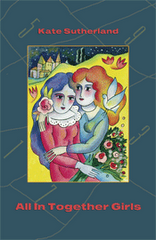
As many great book readers and lovers have said, books are like people, they are friends. When I walk into a bookstore and find the proprietor has for sale The Great Gatsby in first edition, I immediately have a bond with him. He shares my taste in books. And in reading that book, again and again, returning to it as one would regularly telephone an old friend to keep in touch, I develop a really good relationship with Jay Gatsby and Nick Carroway and Scott Fitzgerald. Their familiarity comforts me, I listen to their stories as a good friend would, and I get excited at the prospect of spending time with them. Even though I may enjoy cookies, or kiwis, or clean clothes, I do not form a relationship with any of them, or the places in which they are found. And so an independent bookstore, as opposed to a retail outlet for publications, becomes like a bar or café, where one goes to congregate with one's friends, meet similar folks, and gossip with the proprietor and patrons about what Salman Rushdie has been working on.
Thursday, October 06, 2005
Bookstore Magic
The discussion of independent bookstores continues over at Beggars of Azure. Quillhill eloquently conveys the magic of a great bookstore in this passage:

Tuesday, October 04, 2005
Library Memories
In response to my post about independent bookstores, Quillhill wrote:
I note that Quillhill is a bookseller, so probably these questions are rhetorical. But he got me thinking.
I do have fond memories of libraries, particularly of the one that I visited regularly as a child. The Children’s Department was decorated on a Winnie-the-Pooh theme (based on the wonderful drawings by E.H. Shepard, not the Disney version). Story Hour was held in a cave-like room that one entered through what appeared to be a door in the trunk of a tree just like the House at Pooh Corner. There was a plushy blue carpet on the floor and star-shaped lights embedded in the ceiling. I have vivid memories of lying on that carpet looking up at the twinkly lights while listening to the story ladies reading aloud. Out in the main room, one of the walls was just one long window seat with steps leading up to it. Each week I selected my ten books (that was the limit), then perched on the window seat and disappeared into them until my mom and dad came upstairs to collect me. I can even recall the precise places along the shelves where my favourite books were located, the ones that I checked out over and over again.
I can’t claim similar fond feelings for any of the laundromats or grocery stores that I’ve passed through in my life. However, there has been the odd bar or café that I've embraced as a second home. There, it’s all about the ambience of the place -- the décor, the food, and, most importantly, the people.
All of which takes me back to the initial question: Is it the “independent” or the “book” that makes independent bookstores so special to so many? Certainly the books are central. Being in a room full of books generates a paradoxical combination of comfort and excitement that I've only otherwise experienced in a really good relationship. But in a truly great bookstore, the sort that inspires devotion, it’s never just books randomly tossed together. It’s an inventory carefully chosen and arranged in a space permeated by the personalities of those who own and run the store. It’s the books together with the independent character of the store that make for magic.
Anyone else out there with memories of beloved libraries or bookstores to share?
What is it that makes independent bookstores special? Why does one remember fondly a used bookstore, but not a library? Why don't we have the same feelings about a laundromat, or a grocery? Can feelings for a place such as a bakery, or a local fruit stand, match those for an independent bookstore? Is it the "independent" or the "book" or something else that makes them so special to so many?
I note that Quillhill is a bookseller, so probably these questions are rhetorical. But he got me thinking.
I do have fond memories of libraries, particularly of the one that I visited regularly as a child. The Children’s Department was decorated on a Winnie-the-Pooh theme (based on the wonderful drawings by E.H. Shepard, not the Disney version). Story Hour was held in a cave-like room that one entered through what appeared to be a door in the trunk of a tree just like the House at Pooh Corner. There was a plushy blue carpet on the floor and star-shaped lights embedded in the ceiling. I have vivid memories of lying on that carpet looking up at the twinkly lights while listening to the story ladies reading aloud. Out in the main room, one of the walls was just one long window seat with steps leading up to it. Each week I selected my ten books (that was the limit), then perched on the window seat and disappeared into them until my mom and dad came upstairs to collect me. I can even recall the precise places along the shelves where my favourite books were located, the ones that I checked out over and over again.
I can’t claim similar fond feelings for any of the laundromats or grocery stores that I’ve passed through in my life. However, there has been the odd bar or café that I've embraced as a second home. There, it’s all about the ambience of the place -- the décor, the food, and, most importantly, the people.
All of which takes me back to the initial question: Is it the “independent” or the “book” that makes independent bookstores so special to so many? Certainly the books are central. Being in a room full of books generates a paradoxical combination of comfort and excitement that I've only otherwise experienced in a really good relationship. But in a truly great bookstore, the sort that inspires devotion, it’s never just books randomly tossed together. It’s an inventory carefully chosen and arranged in a space permeated by the personalities of those who own and run the store. It’s the books together with the independent character of the store that make for magic.
Anyone else out there with memories of beloved libraries or bookstores to share?
Saturday, October 01, 2005
Whose Life is it Anyway?
Hermione Lee, Virginia Woolf’s Nose: Essays on Biography (Princeton University Press, 2005).
In previous books, biographer and literary critic Hermione Lee has analyzed the lives and work of writers such as Elizabeth Bowen, Philip Roth, Willa Cather and Virginia Woolf. In this collection of essays, Lee seeks to illuminate the art of biography rather than the life of a new subject. In the introduction, she writes:
Two dominant themes thread through this collection, linking the four essays it contains. The first has to do with the biographer’s subject as an embodied subject. The biographer’s target is always “a living person in a body, not a smoothed-over figure.” But representing a subject’s bodily life poses serious challenges to biographers. The second theme has to do with multiple versions of a single life, and the battles fought between those who have a stake in which version prevails, be they the subject’s family members, friends, lovers, descendants, literary scholars, biographers, or devoted readers.
These two themes come together very viscerally in the first essay, “Shelley’s Heart and Pepys’s Lobsters,” in which Lee discusses instances where bodily relics have played important roles in the formulation of life stories. She makes tantalizing references to the fate of Yeats’s bones, Einstein’s brain, and Napoleon’s penis, before settling on the story of Shelley’s heart as emblematic of “the contested use of sources, of rival versions and myth-making, in which a body part comes to symbolize the subject’s afterlife.” Apparently Shelley’s heart was all that survived the gruesome fate of his body after his drowning death, and his wife and his friends fought over who should get to keep it. Lee writes: “The battle over possession of Shelley’s heart seems to embody the contest over who should ‘own’ Shelley’s story.” And she illustrates the continuation of that battle between biographers who put forth competing versions of the life and of the story of the heart.
The second essay is the one that gives the collection its title, “Virginia Woolf’s Nose.” The nose in question is not Woolf’s own but rather the prosthetic one that Nicole Kidman donned to play Virginia Woolf in the recent film, The Hours. In this essay, Lee considers the layering of Woolf’s life and work with the fictional version of that life and work presented in Michael Cunningham’s novel The Hours, and the subsequent film version based on that novel. Lee does a marvellous job of unravelling these narratives and analyzing the responses of a range of constituencies to the various representations of Woolf. As author of a biography of Woolf and of a critical study of her work, of course Lee herself is a stakeholder here. Her candour about that and about her own responses to the novel and the film enrich rather than detract from her analysis.
The collection is rounded out by an essay on Jane Austen’s rumoured fainting spell upon hearing the news of her family’s impending move to Bath, and, finally, an essay on deathbed scenes in biographies. In the former, Lee illuminates the way that competing versions of Jane Austen’s life have affected interpretation of her work. In the latter, Lee demonstrates how shifting conventions in biography have changed the way deathbed scenes are represented. In both essays, Lee sets a series of different portrayals of the same scene side by side by side. This exercise reveals a great deal about the mechanics of biography.
Near the beginning of Virginia Woolf’s Nose, Lee states: “Biography is a process of making up, or making over.” In these essays, Lee offers a fascinating glimpse into that process of making up and making over.
In previous books, biographer and literary critic Hermione Lee has analyzed the lives and work of writers such as Elizabeth Bowen, Philip Roth, Willa Cather and Virginia Woolf. In this collection of essays, Lee seeks to illuminate the art of biography rather than the life of a new subject. In the introduction, she writes:
Virginia Woolf’s Nose presents a variety of case studies where the biographer is faced with gaps and absences and unprovable stories. The aim is to ask, by looking in detail at such examples, how a life can be brought home to us. How do biographers deal with moments of physical shock, with the subject’s secret bodily life, with the mystery of death, and with the aftermath of rumour and reputation? How do they nose out the personality and the life of the writer through the often ambiguous and deceptive evidence of their work? What part do blame, resentment, personal affection, idealisation, judgment and defensiveness have to play in the courtroom drama of life-writing? Where do biographers start from, and how do they know when to stop?
Two dominant themes thread through this collection, linking the four essays it contains. The first has to do with the biographer’s subject as an embodied subject. The biographer’s target is always “a living person in a body, not a smoothed-over figure.” But representing a subject’s bodily life poses serious challenges to biographers. The second theme has to do with multiple versions of a single life, and the battles fought between those who have a stake in which version prevails, be they the subject’s family members, friends, lovers, descendants, literary scholars, biographers, or devoted readers.
These two themes come together very viscerally in the first essay, “Shelley’s Heart and Pepys’s Lobsters,” in which Lee discusses instances where bodily relics have played important roles in the formulation of life stories. She makes tantalizing references to the fate of Yeats’s bones, Einstein’s brain, and Napoleon’s penis, before settling on the story of Shelley’s heart as emblematic of “the contested use of sources, of rival versions and myth-making, in which a body part comes to symbolize the subject’s afterlife.” Apparently Shelley’s heart was all that survived the gruesome fate of his body after his drowning death, and his wife and his friends fought over who should get to keep it. Lee writes: “The battle over possession of Shelley’s heart seems to embody the contest over who should ‘own’ Shelley’s story.” And she illustrates the continuation of that battle between biographers who put forth competing versions of the life and of the story of the heart.
The second essay is the one that gives the collection its title, “Virginia Woolf’s Nose.” The nose in question is not Woolf’s own but rather the prosthetic one that Nicole Kidman donned to play Virginia Woolf in the recent film, The Hours. In this essay, Lee considers the layering of Woolf’s life and work with the fictional version of that life and work presented in Michael Cunningham’s novel The Hours, and the subsequent film version based on that novel. Lee does a marvellous job of unravelling these narratives and analyzing the responses of a range of constituencies to the various representations of Woolf. As author of a biography of Woolf and of a critical study of her work, of course Lee herself is a stakeholder here. Her candour about that and about her own responses to the novel and the film enrich rather than detract from her analysis.
The collection is rounded out by an essay on Jane Austen’s rumoured fainting spell upon hearing the news of her family’s impending move to Bath, and, finally, an essay on deathbed scenes in biographies. In the former, Lee illuminates the way that competing versions of Jane Austen’s life have affected interpretation of her work. In the latter, Lee demonstrates how shifting conventions in biography have changed the way deathbed scenes are represented. In both essays, Lee sets a series of different portrayals of the same scene side by side by side. This exercise reveals a great deal about the mechanics of biography.
Near the beginning of Virginia Woolf’s Nose, Lee states: “Biography is a process of making up, or making over.” In these essays, Lee offers a fascinating glimpse into that process of making up and making over.
Tuesday, September 27, 2005
Writing to Express Yourself
Here's another snippet from George Bowering:
(Left Hook: A Sideways Look at Canadian Writing (Raincoast, 2005) at pp. 136-137.)
When I asked my daughter's elementary school teacher why she was doing "creative writing" instead of grammar, the teacher said it was so that the children could express themselves. I immediately went to work on that kid. If she was going to go around expressing herself she would never be anything more than an elementary school poet, I reasoned. I let her express herself, sure enough. Scream as loud as you want, Precious, I said, these walls are soundproofed. She turned out to be a pretty good poet and a better short story writer. Never would have got past elementary school if she'd been satisfied to express herself.
No one is interested in a recitation of your dreams, and other people are not curious about the patterns or deeper meanings of your vomit or other excreta. If you are so intent on getting all your internal external, it is going to be pretty well the same stuff all your life.
(Left Hook: A Sideways Look at Canadian Writing (Raincoast, 2005) at pp. 136-137.)
Sunday, September 25, 2005
Form and Content
I’ve been dipping into the essays in George Bowering’s new collection, Left Hook: A Sideways Look at Canadian Writing (Raincoast, 2005). It’s a diverse collection that ricochets between political rants and literary analyses. Of course, the two are not mutually exclusive, but Bowering often elects to focus on one or the other rather than intertwining the two. I have found myself skimming over the pieces on national identity. For the most part, they strike me as rather heavy-handed, replete with stereotypes about central Canada and tired discourse about relations between the centre and the periphery. No doubt as a young, alienated westerner I would have thrilled to such rhetoric, but having now experienced both geographic spaces, I yearn for a more complex and nuanced analysis than Bowering provides here.
Bowering is most interesting when he's squarely addressing literary matters whether in broad terms (for example, ruminating on groups of poets “working with each other, or against each other,” or on reasons to become a poet) or with a narrower focus (close readings of texts by individual writers such as Kroetsch, Atwood, Ondaatje, Acorn, and Purdy). It is Bowering’s preoccupation with form that links these pieces together. Indeed, this preoccupation links the whole collection together, as Bowering is always playing with the essay form regardless of the topic on which he chooses to focus. He notes in the preface that he regards essays as “improvisations made of writing” and he makes good on the promise of experimentation that is implicit in this definition.
Here are a couple of passages from the first essay in Left Hook which convey a bit of the flavour of the collection:
At his best, Bowering as essayist is playful, provocative, and insightful. I look forward to reading more.
Bowering is most interesting when he's squarely addressing literary matters whether in broad terms (for example, ruminating on groups of poets “working with each other, or against each other,” or on reasons to become a poet) or with a narrower focus (close readings of texts by individual writers such as Kroetsch, Atwood, Ondaatje, Acorn, and Purdy). It is Bowering’s preoccupation with form that links these pieces together. Indeed, this preoccupation links the whole collection together, as Bowering is always playing with the essay form regardless of the topic on which he chooses to focus. He notes in the preface that he regards essays as “improvisations made of writing” and he makes good on the promise of experimentation that is implicit in this definition.
Here are a couple of passages from the first essay in Left Hook which convey a bit of the flavour of the collection:
Of course when it comes to writing, maybe especially when it comes to the writing of fiction, there is no such thing as “content,” as opposed to form or even allied with form. What is there to contain? If a realist writer tells you that her characters “took on a life of their own,” how can they be said to be contained? There is no content in a book of fiction.[…]
I do not want, as a reader or writer, to extirpate description and character altogether. I just want readers to notice the writing. Ethel Wilson said that the most important thing in a story is the sentence. She was kind of a realist, but she loved form. Loved it. If you notice the writing and the writing is good, you will love it. You might also notice in the moment of loving that the reader is the focus of the fictional act.
At his best, Bowering as essayist is playful, provocative, and insightful. I look forward to reading more.
Friday, September 23, 2005
Collections within the Collection
Inspired by Bookworld (who was in turn inspired by Golden Rule Jones), I’m posting a list of collections (four or more books by or about the same author) within my book collection. My list definitely doesn’t provide an accurate reflection of my literary enthusiasms. As Golden Rule Jones notes of his own list, the parameters of the exercise dictate that favourite authors who wrote only one or two books are left out. As well, because of limited cash and shelf space, I have often immersed myself in the work of a favourite author courtesy of the library. For example, like Bookworld, I read a lot of Thomas Hardy as a teenager but since I checked his novels out of the library rather than buying them, Hardy makes only a token appearance on my bookshelf. There are also some authors listed here whose work I am no longer particularly keen on, but even then I have a great deal of trouble letting books go. Finally, the single author focus means that my fabulous collections relating to groups of writers (the Beats, the New York School poets, the Lost Generation, the Bloomsbury group) are barely represented here.
That said, here’s my list:
Lucy Maud Montgomery - 34
Enid Blyton - 20
Maud Hart Lovelace - 16
Margaret Atwood - 11
C.S. Lewis - 11
L. Frank Baum - 10
Michel Foucault - 10
H.D. (Hilda Doolittle) - 9
P.L. Travers - 9
Laura Ingalls Wilder - 9
Madeleine L’Engle - 8
E. Nesbit - 8
Virginia Woolf - 8
Susan Cooper - 7
Lorna Crozier - 7
Elizabeth Enright - 7
J.R. Tolkien - 7
Beverly Cleary - 6
Robertson Davies - 6
Mary McCarthy - 6
Sylvia Plath - 6
J.K. Rowling - 6
Louisa May Alcott - 5
Lloyd Alexander - 5
Sigmund Freud - 5
Margaret Laurence - 5
Edna St. Vincent Millay - 5
Anais Nin - 5
Robert Louis Stevenson - 5
Noel Streatfield - 5
Kay Boyle - 4
Di Brandt - 4
Elizabeth Barrett Browning - 4
Emily Dickinson - 4
Carl Jung - 4
Don Kerr - 4
Patrick Lane - 4
Robert Lowell - 4
Dorothy Parker - 4
Jean Rhys - 4
Stuart Ross - 4
Delmore Schwartz - 4
I’m not surprised by the number of children’s authors who appear on the list. I’ve made it a project recently to acquire copies of my childhood favourites and many of those are series of books. I am surprised by the fact that, within the adult books, poets keep pace with fiction writers. There are only a few theorists, but that's because most of my theory books are in my office at work and so aren't included in this tally. Golden Rule Jones and This Space both comment on the dearth of women authors on their lists. My list tilts decidedly in the other direction with twenty-eight women out of a list of forty-two.
Thursday, September 22, 2005
Organizing with Index Cards
I’m getting organized. I make this claim often and it never comes to pass. But this time I think I’m really on to something.
Back in April, I read an article on organization in the Globe & Mail that directed me to the 43 Folders blog. There, Merlin Mann extols the virtues of the Hipster PDA, a low-tech organizational system built from a stack of 3" x 5" index cards and a paper clip. I’m not fond of electronic gadgets, so this system struck me as a highly promising route out of my usual chaos.
I bought stacks of index cards then promptly forgot about them. As with previous organizational efforts, my failure to follow through rendered the proposed solution part the problem. The unused index cards became more clutter to clear.
Happily, I’ve now come up with a use for the index cards.
Those who have read my introductory post know that this blog grew out of a pen and paper book journal. I’ve continued to maintain both journal and blog. The former is simply a dated list of books I’ve finished reading whereas the latter is a forum for more detailed ruminations about the most thought-provoking of those books. Lately, I’ve been wishing that I’d structured the book journal differently so as to keep track of all of the books I’ve started and not just the ones I’ve finished. I’ve also been thinking that I’d like to be a bit more organized about the whole blog undertaking. Enter the index cards.
Here’s my new system. When I begin reading a book, I write out the title, author and publication date at the top of an index card. Thereafter, I use the index card as a bookmark. I keep a pen at the ready and, if moved to do so, make notes on the index card as I read. When I finish the book (or finish with the book if I decide not to persevere to the end), I put the card in a file box. The file box becomes my new more complete pen and paper book journal, and the cards with notes on them become the basis for blog posts.
There’s a beautiful simplicity to the system. It certainly makes me feel more organized, which is no small thing. Whether it generates more or better blog posts remains to be seen.
Wednesday, September 21, 2005
Reading about Writing 2
Pat Walsh, 78 Reasons Why Your Book May Never be Published and 14 Reasons Why it Just Might (Penguin Books, 2005).
In the early pages of 78 Reasons, Pat Walsh provides a statistical wake-up call to writers aspiring to publication:
He terms this the “crap-to-gem ratio.”
Alas rejection letters are unlikely to enlighten writers as to why their manuscripts fall within the crap category rather than among the gems:
In 78 Reasons, Walsh dispenses with the niceties and provides some brutally honest advice in precisely the form his title promises: a list of 78 reasons why your book may not be published and 14 reasons why it might. It’s a dumb title but a smart book. It’s also a funny book, as exemplified in the first reason why your book may never be published: “Because you have not written it.”
Walsh insists that his is a book about publishing rather than a book about writing. It is designed for the writer who has already produced a complete manuscript but is having trouble selling it. Nevertheless, more than a quarter of the book (reasons 2 through 25) is devoted to identifying problems within your manuscript and as such certainly qualifies as writing advice. I didn’t find much new here as far as content goes, but the tone is distinctly different from the sort cheerleading that is often to be found in writing handbooks. Walsh’s message is very straightforward. If your manuscript is not generating interest, it is likely because it’s not good enough. What should you do about that? Make it better.
In reasons 26 through 78, Walsh offers a wealth of inside information on how to navigate the publishing industry. He provides illuminating sections on the roles of agents and editors, the perils of self-publishing, and the truth about the slush pile.
The final section of the book, “14 reasons why it just might,” basically rehashes the highlights of what has gone before but gives them a positive tilt. These are the “dos” on the flipside of the “don’ts” previously articulated. Even here Walsh remains relentlessly realistic.
78 Reasons is a bracing read. It should prove very useful to Walsh's intended audience of writers who have completed a manuscript but are struggling to capture the interest of agents and publishers. Unfortunately, I suspect, those who most need Walsh’s advice are the ones least likely to recognize that need.
In the early pages of 78 Reasons, Pat Walsh provides a statistical wake-up call to writers aspiring to publication:
Of the roughly four thousand submissions our publishing house receives a year -- unsolicited and unagented -- at least half reek of bad writing and sorry story lines. Another thousand significantly lack in one area or the other. The next eight hundred are not horrid, just not good enough -- mediocre efforts, rife with clichés and tired plots. Of the two hundred left, I would say a hundred and fifty have some real merit but are a good idea badly executed or a bad idea nicely realized. From the fifty remaining, forty are heartbreakers -- almost but not quite there. In some way, that is difficult to explain other than to say it usually manifests itself when a reader puts down the manuscript and is not excited about picking it back up. Or they fall apart at a crucial stage in a way that is difficult or impossible to fix. The remaining ten are very good and a few of them are exceptional.
He terms this the “crap-to-gem ratio.”
Alas rejection letters are unlikely to enlighten writers as to why their manuscripts fall within the crap category rather than among the gems:
Editors and agents do not give blunt advice and criticism very often. It does not do any good, because the writer almost always reacts defensively and stops listening. Criticizing someone’s writing in a candid way is an awkward endeavor. Nobody wants to hear it, even those who consider themselves thick-skinned. So instead, we wilt and temper our strong opinions down to polite suggestive remarks that may even be mistaken for praise.
In 78 Reasons, Walsh dispenses with the niceties and provides some brutally honest advice in precisely the form his title promises: a list of 78 reasons why your book may not be published and 14 reasons why it might. It’s a dumb title but a smart book. It’s also a funny book, as exemplified in the first reason why your book may never be published: “Because you have not written it.”
Walsh insists that his is a book about publishing rather than a book about writing. It is designed for the writer who has already produced a complete manuscript but is having trouble selling it. Nevertheless, more than a quarter of the book (reasons 2 through 25) is devoted to identifying problems within your manuscript and as such certainly qualifies as writing advice. I didn’t find much new here as far as content goes, but the tone is distinctly different from the sort cheerleading that is often to be found in writing handbooks. Walsh’s message is very straightforward. If your manuscript is not generating interest, it is likely because it’s not good enough. What should you do about that? Make it better.
In reasons 26 through 78, Walsh offers a wealth of inside information on how to navigate the publishing industry. He provides illuminating sections on the roles of agents and editors, the perils of self-publishing, and the truth about the slush pile.
The final section of the book, “14 reasons why it just might,” basically rehashes the highlights of what has gone before but gives them a positive tilt. These are the “dos” on the flipside of the “don’ts” previously articulated. Even here Walsh remains relentlessly realistic.
78 Reasons is a bracing read. It should prove very useful to Walsh's intended audience of writers who have completed a manuscript but are struggling to capture the interest of agents and publishers. Unfortunately, I suspect, those who most need Walsh’s advice are the ones least likely to recognize that need.
Thursday, September 15, 2005
In Praise of Independent Bookstores
An independent bookstore opened in my neighbourhood last week. This seems such an extraordinary occurrence in today’s book market that I didn’t quite dare to believe it when the “Opening Soon” sign went up. The front window was covered in brown paper, but there was one corner where the paper curled up offering a glimpse of the renovations going on inside. All summer I stopped every time I walked past and peered in wistfully. What sort of bookstore would it be? When would it open? Would it ever open? Finally I went off on holiday and when I returned, voila, there it was, doors flung open with a wealth of books inside to browse and buy.
I’ve made frequent references in this blog to borrowing books from the library. But make no mistake, I buy plenty of books too. And I have to admit, I’m promiscuous about it; I’ll buy almost anywhere. I buy online: out of print childhood favourites on ebay and abebooks, obscure local history pamphlets from small British presses, and new books I can’t find anywhere else on amazon. I frequent several second-hand bookstores where I’ve often discovered books that I didn’t realize I wanted or needed until I pulled them off the shelf. And yes, I will buy at the closest big box store, particularly if I suddenly decide at 9 pm on a Wednesday that there’s a book I can’t do without for a moment longer. But for shiny new books, I prefer to spend my money at independents and what a joy now to be able to meander just a few blocks from my house and find some fabulous, unexpected gem in the new bookstore.
It’s long been a fantasy of mine to have my own bookstore. (Clearly I’m not alone in this -- see Book World and Bookish.) But I have no head for business and I understand that it’s never been tougher to prosper in the bookselling business than it is now. So I’ll content myself with doing my bit to keep other people’s bookstores afloat and with living the bookseller’s life vicariously through evocative memoirs like Betsy Burton’s The King’s English: Adventures of an Independent Bookseller.
Burton’s book is organized rather like a bookstore, with thematic sections to browse: fiction, crime fiction, poetry, western literature, and children’s books. Each of these sections is replete with praise for beloved books, lists of recommended titles, and tales of successful author visits as well as of occasional readings gone wrong. Much illuminating inside information about the book business is interwoven throughout. Burton writes with refreshing candour about the many challenges, large and small, that she has faced in the nearly thirty years that her Salt Lake City store, The King’s English, has thus far been in business: difficult business partnerships, the odd larcenous employee, censorship in all its guises, and simply surviving as an independent in today’s corporate landscape. Shining through on every page is Burton’s deep love of books and her passionate commitment to a lifetime’s work of matchmaking each reader with exactly the right books.
Reading Burton’s book has strengthened my resolve to shop independent, and I suspect that the new bookstore up the street will be the chief beneficiary.
Sunday, September 11, 2005
Campus Satire
It occurred to me recently that I’ve read more about Randall Jarrell than I’ve read of Randall Jarrell. This is just wrong, so I’ve set about rectifying the situation. I have a weakness for campus novels, so I’m beginning with Pictures from an Institution. This pithy description (excerpted from the NYTBR) appears on the back cover: “This is a searching novel about a mean lady novelist writing a mean novel about a college where she is spending a year teaching creative writing.” It sounds so promising but in the early going I’m a bit disappointed. There are some wickedly funny bits, but so far it reads more like a satirical essay than a satirical novel. I suppose satire always has a distancing effect, but I’d still like to be able to enter into the fictional world more fully than the narrative has allowed thus far. I will persevere though. In the meantime, here’s a passage that made me chuckle:
Suddenly the committee meeting that I’m scheduled to attend tomorrow seems less of an obligation than an opportunity…
But Dwight Robbins; President Robbins, that is; the President, that is -- the President interested Gertrude. She realized, suddenly, that she was no longer between novels. She looked at the President as a weary, way-worn diamond-prospector looks at a vein of blue volcanic clay; she said to herself, rather coarsely -- Gertrude was nothing if not coarse: “Why girl, that Rift’s loaded.” How can we expect novelists to be moral, when their trade forces them to treat every end they meet as no more than an imperfect means to a novel?
Suddenly the committee meeting that I’m scheduled to attend tomorrow seems less of an obligation than an opportunity…
Subscribe to:
Posts (Atom)