Thursday, July 12, 2007

The Great Affair is to Move

Robert Louis Stevenson on travel:

For my part, I travel not to go anywhere, but to go. I travel for travel's sake. The great affair is to move; to feel the needs and hitches of our life more nearly; to come down off this feather-bed of civilization, and find the globe granite underfoot and strewn with cutting flints.

From Robert Louis Stevenson, Travels With a Donkey in the Cevennes (1879).

Saturday, July 07, 2007

Conversational Adornment

Robert Louis Stevenson on the women of Monastier:

One thing was notable about these women, from the youngest to the oldest, and with hardly an exception. In spite of their piety, they could twang off an oath with Sir Toby Belch in person. There was nothing so high or so low, in heaven or earth or in the human body, but a woman of this neighbourhood would whip out the name of it, fair and square, by way of conversational adornment.

From Robert Louis Stevenson, Travels With a Donkey in the Cevennes (1879).

Friday, July 06, 2007

Reviewed in the Women's Post

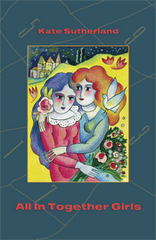
There's a good review of my book, All In Together Girls, in this week's edition of the Women's Post. I particularly like this bit:

Sutherland reminds us of our impulse to make sense of the world and ourselves through storytelling, whether by writing or by inventing ourselves, making ourselves up. She also speaks to our intense dislike of having others misinterpret or worse, steal (literally and metaphorically) our stories and erase our selves.

I hoped that I had done that. Click here to read the whole of the review. It's the second article on the page, so you'll need to scroll down a bit to find it.

Thursday, July 05, 2007

A Parcel From The Book Depository

Another day, another book parcel, this one containing a big, fat history book by David Kynaston titled Austerity Britain: 1945-51. Two rave reviews of it piqued my interest. The Guardian review opened with the statement: "This is a classic; buy at least three copies - one for yourself and two to give to friends and family," while the Observer review opined:

It is very hard to praise the author too highly. […] Austerity Britain is as supple as willow. For all its factual density, it reads wonderfully. And while its purely literary merits are kept skilfully (and modestly) under control, there can be no doubt that this book is both a history and a triumphant work of art.

Given my fascination with the historical period, how could I resist?

Ostensibly the book is available in Canada, but I haven’t seen it in any stores and amazon.ca advised that if I ordered it from them it could take as long as four months to reach me. So I ordered it directly from Britain via The Book Depository and, scarcely a week later, here it is in my eager hands. The icing on the cake is that shipping was free, even overseas. It was my first order from The Book Depository and it definitely won't be my last.

Sunday, July 01, 2007

The Armchair Traveler Reading Challenge


I’m not planning any further actual travel this summer, and I’m a great fan of travel writing, so how could I resist the Armchair Traveler Reading Challenge? The challenge originates with Lesley of A Life in Books, and the rules are simple. Participants must read six books that connect with the ‘armchair traveling’ theme between July 1st and December 31st. The books need not be limited to conventional travel writing. Fiction or non-fiction will fit the bill so long as the location is integral to the book. Participants are asked to post their list of six at the outset, although making substitutions along the way is cheerfully permitted.

A number of the books that I’m plotting to read in connection with the Reading Across Borders Challenge could do double duty here. But there are many other books on my towering TBR pile that also fit the theme. Here’s a list of twelve from which I expect to carve out my six challenge reads:

1. James Baldwin, Another Country (New York).
2. Paul Bowles, The Sheltering Sky (North Africa).
3. Kathleen Jamie, Findings (Scotland).
4. Alfred Kazin, A Walker in the City (New York).
5. Andrea MacPherson, Beyond the Blue (Dundee, Scotland).
6. Jeremy Mercer, Time Was Soft There (Paris).
7. Mary Morris, The River Queen (Mississippi River).
8. Anna Quindlen, Imagined London: A Tour of the World's Greatest Fictional City (London).
9. Robert Louis Stevenson, Travels with a Donkey (France).
10. Terry Teachout, City Limits (Missouri).
11. Mark Twain, Innocents Abroad (Europe & the Middle East).
12. Virginia Woolf, The London Scene: Six Essays on London Life (London).

Wish me “bon voyage”!

Friday, June 29, 2007

Audio Clip of My Radio Interview

An audio clip from my radio interview is now posted on my website. Click here to listen to Jennifer LoveGrove and me discussing such topics as book blogs, the anxiety of influence, and the challenges involved in shifting from writing short stories to writing novels.

Elaine Dundy, Angry Young Men, and Bad Girls

I noted the other day that I'd received the copy of Elaine Dundy’s The Dud Avocado that I ordered from NYRB Classics. Before that though, while I eagerly awaited its arrival, I was surprised and delighted to find another Dundy title, The Old Man and Me, at Nicholas Hoare Books. Delighted because it too garnered an enthusiastic endorsement from Our Girl in Chicago at About Last Night, and I've come to regard her as a reader of impeccable taste. Surprised because I thought it was out of print. On the latter point, my information was evidently out of date, for there it was on the shelf, a lovely Virago edition published in 2005.

I cracked it open on the streetcar ride home, beginning with the introduction penned by Dundy herself. Of the motivation behind the book, she writes:

My specific aim in writing this novel was to present an anti-heroine in response to all the anti-heroes so popular of the day, beginning with Kingsley Amis's Jim Dixon in Lucky Jim, John Osborne's Jimmy Porter in Look Back in Anger and all the anti-heroes who followed in their wake. Loosely bound together as Angry Young Men, they hit out at everything phony, pompous, prudish, and pretentious. Their anger was exhilarating. To their delight (and to his later embarrassment), Somerset Maugham called them ‘scum’. Creating the female counterpart I knew would be tricky, as in those days when relationships between men and women were at an all-time low, females were depicted as passive and put upon. (Then came the '70s—Gloria Steinem and her Ms. magazine, Germaine Greer and her Female Eunuch, Carmen Callil and her all-female publishing house Virago. And nothing was ever the same again.) Back in the '60s I was aware that my anti-heroine might scare people off. But I did it anyway. And it was fun. After all, Cyril Connelly had advised me about my private life: 'Make up your mind, you can either be a monster or a doormat.' I opted for the former.

Some of you may remember that not long ago I was revelling in the reading of Humphrey Carpenter's group biography of those same angry young men. While I very much enjoyed being in their company for the duration of the book, I couldn’t help but register how thoroughly masculine their world was. So, needless to say, I am most intrigued at the prospect of making the acquaintance of Dundy’s female counterpart to their fictional creations.

This juxtaposition brings a third book into the fray: Ian McEwan's On Chesil Beach which I read at the same time as Carpenter's The Angry Young Men. Dundy's The Old Man and Me was first published in 1964 while On Chesil Beach was released just this spring. But both books are set in 1962 England, and I'm fascinated at the prospect of considering Dundy's unrepentant bad girl heroine in conjunction with the peculiarly innocent couple at the centre of On Chesil Beach. Not that I'm suggesting that one book's depiction of that time and place is bound to be somehow more authentic than the other. Obviously there is plenty of room for diverse experiences and viewpoints in any given time and place. Nevertheless, I find it very interesting to have these books come into contact in my consciousness in this way.

It's one of those exhilarating occasions when books that I've read simultaneously or in close proximity to one another seem poised to enter into a conversation, and I look forward to eavesdropping on what they have to say to one another.

Monday, June 25, 2007

On the Radio

I’m going to be on the radio tomorrow (Tuesday, June 26th) talking about all things literary, including my new book of short stories, with Jennifer LoveGrove. It's a radio show on CKLN called “In Other Words.” Tomorrow will be Jennifer’s inaugural stint as host of the show and I’m honoured that she’s asked me to be her first guest.

You can listen to the show live online by tuning in at 2 pm CDT. Click here to do so.

Goodies from NYRB Classics


I've confessed before that I have trouble resisting any of the titles in the New York Review of Books Classics collection. Several of the Toronto bookstores that I frequent carry them, so I can usually get my pick of them straight off the shelf. But there were a few that I particularly coveted that I hadn't yet come across which prompted me to put in a mail order. My NYRB parcel has arrived bearing the books you see pictured above, along with a complete catalogue that makes future mail order extravaganzas a distinct likelihood...

Why these three books?

Wee Gillis by Munro Leaf was a childhood favourite of mine and it is every bit as delightful as I remembered it to be (although admittedly only tangentially related to the Scottish life it purports to depict). I had a very vivid memory of the Robert Lawson illustration of Wee Gillis manfully shovelling down a large bowl of oatmeal each morning which proved to be accurate to the finest detail. It's interesting to contemplate what snippets of childhood reading stick with one and why. I wonder if I can attribute my lifelong fondness for oatmeal to my early encounters with this book?

I have been keen to read The Dud Avocado by Elaine Dundy since noting several positive mentions of it by both Terry Teachout and Our Girl in Chicago at About Last Night. The news that a NYRB edition of it had just been released containing an introduction penned by Teachout called for immediate acquisition. I'm sure that the book will wend its way into Toronto bookstores eventually, but I was too impatient to wait. Paris, Pernod, and promiscuity in the 1950s--how could I go wrong with this one? (Incidentally, I note that NYRB has also recently published one of my all time favourite Paris books: Memoirs of Montparnasse by John Glassco--a gloriously witty and irreverent account of literary Paris in the 1920s. Do yourself a favour and pick up a copy of that one if you haven't already read it.)

Patrick Hamilton is also on my radar thanks to mentions by litbloggers. For example, Isabella at Magnificent Octopus and Ellis at The Sharp Side have been eloquent in singing Hamilton's praises. When I first resolved to read some of Hamilton's work I thought that I would begin with Hangover Square. But since NYRB has opted to publish Slaves of Solitude, it's the first of Hamilton's books to make it into my hands, and it's the book with which I will begin.

I'll keep you posted on how I fare with both Dundy and Hamilton.

Tuesday, June 19, 2007

This Month at the Short Story Discussion Group

The focus of this month's session of the short story discussion group is Isak Dinesen’s "The Blank Page" (1955).

Participants are invited to post their thoughts on the story at A Curious Singularity whenever they feel moved to do so. If you’re not yet a member of the short story discussion group and you would like to join, please e-mail me. Of course, anyone can contribute through the comments sections of the posts without officially joining the group.

I look forward to the discussion of Dinesen's story.